Exercise modifies the body image. A marathoner might associate a single running course with the remembered pain of a knee; a weightlifter avoids motions that once felt natural. Sleep relieves the pain, but the ongoing nag can be pretty depressing when normal can’t come back any sooner.
The emergence of peptides in the research arena: specific peptides are being studied as to how they may modulate signaling, tissue repair, and inflammation. Understanding the science of how our bodies maintain and repair itself guides us to good decisions.
Table of Contents
Regenerative Peptide Signaling and the Problem of Restoring Tissues
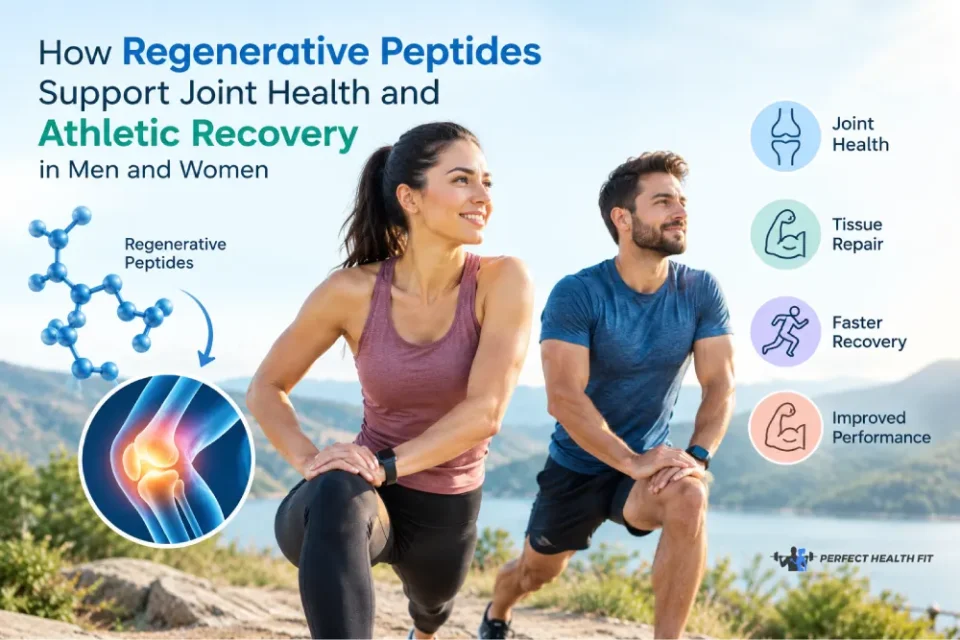
Peptides are blocks of amino acids that perform various roles in your body. Certain peptides function as endocrine and paracrine factors and are signaling molecules that can influence organs, tissues and cells. This has piqued the interest of researchers in regenerative medicine-particularly when it comes to repairing tissue.
However, the blood supply for tendons and ligaments is less than that of other tissues and they may not receive as much oxygen and nutrients. The cartilage has the least blood supply of all-this makes it one of the hardest connective-tissue problems to treat, even with less training.
Each peptide, by the virtue of having a specific composition, shows fascination as the ability to affect the pathways involved in the manufacture of collagen, signaling of cells, perfusion and tissue regeneration. These activities help us assemble how peptides might function to mend tissues that showcase slow recovery such as cartilages, ligaments, and tendons.
Recent biomedical literature on Regenerative Peptide is driving independent biohackers to look for ways to Bpc 157 buy online instead of waiting for official human trials.
Joint Health and Mobility in Active Men and Women
Excess loading, abrupt twisting or kinking will quickly break down active joints and cause inflammation, swelling and micro-tearing in the ligaments. Preliminary studies on focused peptides have observed the possibility of signaling the body’s cellular pathways that promote tissue healing with synthesis of collagen, growth of new blood capillaries.
For instance, BPC-157 has been identified as a research interest thanks to its effect on tissue healing, and, relatedly, the tissue/blood-vessel axis, while TB-500 has been identified as a research interest thanks to mechanisms related to cell migration, and tissue healing, related to the biology of thymosin beta-4.
But in terms of use, this will vary depending on what you are using, the severity of injury and doing the right rehab and recovery. But past training history, work volume, injuries, sleep and recovery will all be factors.
Single Peptides and Blends: Why the Research Question Matters
You can do one test on a single compound and one test on a mixture. For example, the BPC-157 study looks at what BPC-157 does biologically. But, there’s a question about the mixture of BPC-157 and TB-500: what do the compounds do when they are working together?
The distinction matters when evaluating research materials:
- Single compound: studies using a single compound can sometimes be easier and more straightforward to monitor the effects on the body.
- You can look at the job mix for synergy, but at the very least, each ingredient, as well as the mix, should be perfectly tested.
- Batch specific scientific information and plain language instructions help assess material quality.
Nevertheless, more is not always better especially when it comes to blends with fixed rations.
BPC-157 and TB-500: Possible Complementarity Instead of Confirmed Synergism
Picture an athlete who has a tendon injury and also has a knot in the surrounding muscles. This is the reason why researchers have examined compounds that are associated with various types of cellular activity. BPC-157 has examined pathways associated with healing tissue, while thymosin beta-4 has examined pathways associated with cell migration and tissue maintenance.
The cocktail immediately raises the question, might these bizarre mechanisms, these two very different activities, actually work together? Pre-clinical studies have shown these are compatible since they support different complementary stages of the body’s natural healing cascade.
Before considering any peptide product, checking compound identity, independent analytical results, batch records, and storage conditions is more informative than relying on marketing claims of purity. These checks can help distinguish products with verifiable quality documentation from those supported mainly by promotional claims. Also note that product quality alone does not establish safety or clinical effectiveness.
In essence, getting back to a resilient athletic form is going to require more than a quick post workout energizer. Making good choices is about first figuring out what’s broken, and then finding a peptide that has shown its potential. Good evaluation and targeted rehab will remain essential, as well as the research required for the regenerative peptides to have us convinced.