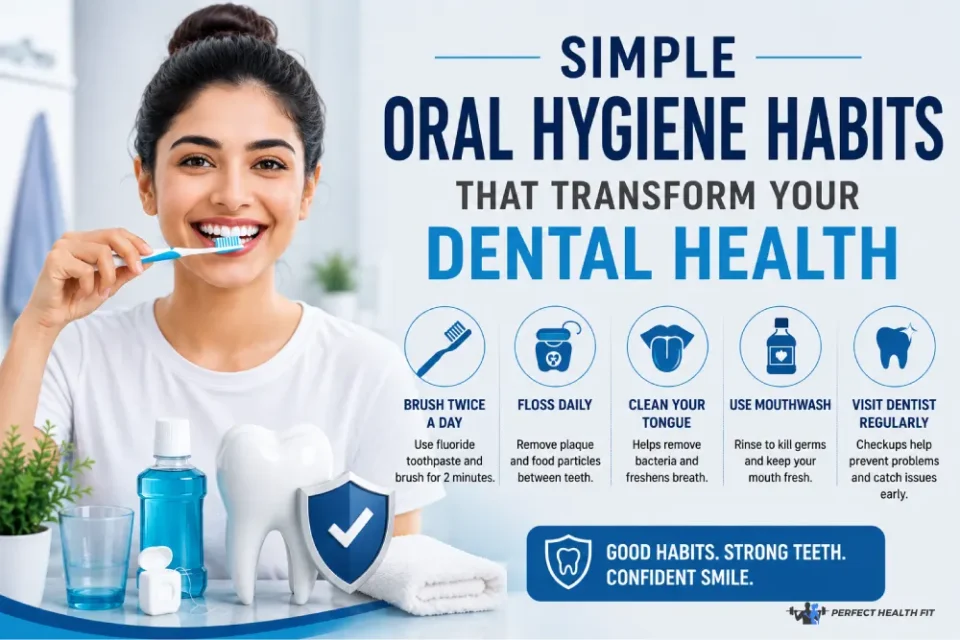
Simple oral hygiene habits that transform dental health usually come down to a few basic things such as brushing properly twice a day, cleaning between the teeth and being mindful about diet and routine check ups. Nothing complicated, but the impact is often underestimated.
Around half of adults will deal with gum disease at some stage in their lives, which shows just how common preventable dental issues are. The positive side is that small daily habits, done consistently, can make a real difference in keeping both teeth and gums healthy over time.
Table of Contents
What are simple oral hygiene habits that improve dental health?
At the core of good oral health are a handful of habits that most people already know about, but do not always follow closely. Brushing twice a day with fluoride toothpaste is the starting point. After that, cleaning between the teeth and paying attention to how often sugary foods or drinks are consumed becomes just as important.
Plaque does not take long to start forming after eating, sometimes within a few hours, which is why skipping routine care can quickly add up. When brushing is done properly on a daily basis, plaque levels can drop by roughly 40%, which helps protect both enamel and gums. It is less about occasional perfect effort and more about what happens day after day.
How does brushing technique affect dental health?
Technique is where a lot of people unknowingly go wrong. It is common to assume that brushing harder means brushing better, but that is not the case. In fact, heavy pressure can sometimes do more harm than good by irritating the gums or wearing down enamel over time.
A gentle more controlled approach tends to work better. Small circular movements around the gum line help lift plaque more effectively without causing damage.
The full two minutes matters too, even if it feels like a long time. Most rushed brushing simply does not reach all areas properly, especially the back teeth where plaque tends to build up unnoticed.
There is also a noticeable difference in how the mouth feels when brushing is done properly. It is not just about prevention, but also that cleaner, smoother feeling afterwards.
Why is cleaning between teeth important?
This is the part of oral care that often gets skipped, yet it is one of the most important. Toothbrushes cannot reach the tight spaces between teeth where food and bacteria naturally collect.
When those areas are ignored, plaque builds up quietly and starts irritating the gums. Over time, this can lead to inflammation, sensitivity or decay. Flossing or using interdental brushes once a day helps deal with this hidden build up.
Regular cleaning between teeth has been shown to reduce the risk of gum disease by up to 40%. It is a small habit, but it makes a noticeable difference over time. Many people also find their breath improves quite quickly once this becomes part of their routine.
How does diet affect oral hygiene?
What someone eats during the day has a direct impact on oral health, even if it is not always obvious at first. Sugar feeds the bacteria in the mouth, which then produce acids that attack tooth enamel.
The frequency of sugar intake matters just as much as the amount. Snacking on sugary foods throughout the day means teeth are repeatedly exposed to acid without enough recovery time in between. This increases the risk of tooth decay.
Research has shown that children with higher sugar consumption are significantly more likely to develop tooth decay than those who consume less. The same principle applies to adults as well.
Small changes help. Choosing water instead of sugary drinks and including more tooth friendly foods such as dairy, vegetables and nuts can support stronger enamel and better long term oral health.
How often should you visit the dentist?
Even with good daily habits, professional dental care still plays an important role. There are areas in the mouth that are difficult to clean properly at home, no matter how careful someone is.
Dentists can also spot early signs of problems before they become more serious. Most people are advised to go to the oral hygienist every six months, although some may need more frequent visits depending on their oral health needs.
The main benefit is early detection. When issues are found early, treatment is usually simpler and less invasive, which helps prevent more complicated dental work later on.
Conclusion
Simple oral hygiene habits really do add up over time. Brushing properly, cleaning between teeth, being mindful of diet and keeping up with dental visits all work together to support better oral health. It is not about doing anything extreme, but about consistency. Small habits repeated daily are what make the real difference in the long run!